Hey,
check it out. It's an English festival incorporating theatre companies from different parts of the world using 'crowd-funding' to support their actors and festival planning.
Tuesday, May 8, 2012

Tuesday, March 27, 2012
Being mixed, créolité/creolitude, mestizaje
I come from a cultural background (through my parents) which is based on the mixture of the various peoples which inhabited the island of Mauritius (Creoles). It's not easy to define and it's not straightforward. Our heritage includes Afro-Malagasy slaves who lost most of their traditions due to discrimination that they experienced. It includes the European settlers who came and formed the most influential culture during the period of colonialism.
It is very hard to define where Creoles stand and should stand on culture, if my grandmother's Chinese my experiences would be different from a Creole who had an Indian grandfather. Each individual can take their own stand on their heritage.
There are two main foci or cultural focal points though: the African and the European which have been the most influential in defining the identity Creole culture today. The African slaves who were born in Mauritius were known as Creoles as were considered their Mauritian-born European counterparts (though Euro-Mauritians would not be called Creoles today).
The main thing I have realised from reading about similar cultures and backgrounds in the Caribbean and Latin America is that, it is not just enough to say the we are a blend of this and that. But to realise that some cultures suffered in the process, while others prospered (Africans and Native Americans versus Europeans) and that reinforced the development of our identities.
That is not to say that our European heritage is not valuable and should be rejected but we should try and honour the different parts of our heritage as something specific, tangible like the Caribbean writer Edouard Glissant says when seeing Creolitude/créolité as something which incorporates our different heritages like a rhizome (taken from contemporary European philosophers called Gilles Deleuze and Felix Guattari).
A rhizome is for an example the roots of grass which spread out starting new plants without a specific root starting a single tree but a connection of nodes from which we have different plants starting out.
Thus for Creoles around the world and similar cultures of mixed heritage - mixed people in Latin America (mainly of African, Native American and European heritages), each of our heritages can be seen on an equal level and be learned about to help reinforce and better define our identity today.
It is very hard to define where Creoles stand and should stand on culture, if my grandmother's Chinese my experiences would be different from a Creole who had an Indian grandfather. Each individual can take their own stand on their heritage.
There are two main foci or cultural focal points though: the African and the European which have been the most influential in defining the identity Creole culture today. The African slaves who were born in Mauritius were known as Creoles as were considered their Mauritian-born European counterparts (though Euro-Mauritians would not be called Creoles today).
The main thing I have realised from reading about similar cultures and backgrounds in the Caribbean and Latin America is that, it is not just enough to say the we are a blend of this and that. But to realise that some cultures suffered in the process, while others prospered (Africans and Native Americans versus Europeans) and that reinforced the development of our identities.
That is not to say that our European heritage is not valuable and should be rejected but we should try and honour the different parts of our heritage as something specific, tangible like the Caribbean writer Edouard Glissant says when seeing Creolitude/créolité as something which incorporates our different heritages like a rhizome (taken from contemporary European philosophers called Gilles Deleuze and Felix Guattari).
A rhizome is for an example the roots of grass which spread out starting new plants without a specific root starting a single tree but a connection of nodes from which we have different plants starting out.
Thus for Creoles around the world and similar cultures of mixed heritage - mixed people in Latin America (mainly of African, Native American and European heritages), each of our heritages can be seen on an equal level and be learned about to help reinforce and better define our identity today.
Sunday, January 22, 2012
Colombian folklore (legends): Patasola
Colombian folklore involves stories which relate to the cultural influences that have helped to create Colombian society: European (Spanish), Indigenous and African.
The first one I will look at is called Patasola, Patasola is a one footed female monster who lives in the jungle. Patasola actually comes from the Spanish words for one foot (sola and pata)
Here is an example of her taken by Edgar Feria:

The first one I will look at is called Patasola, Patasola is a one footed female monster who lives in the jungle. Patasola actually comes from the Spanish words for one foot (sola and pata)
Here is an example of her taken by Edgar Feria:


Patsola was originally a human being who was killed by her husband for being unfaithful during which time he hacked off her leg.
Patasola is like a similar Colombian legend (Madremonte), they both serve as guardians of the environment. She lures lone male farmers, being attractive and takes them when they are in the forest too suck their blood and devour them.
For more info. :
http://www.todacolombia.com/folclor/patasola.html (in Spanish)
Monday, August 8, 2011
Exploring Mauritian instruments: Part 1 the Ravanne
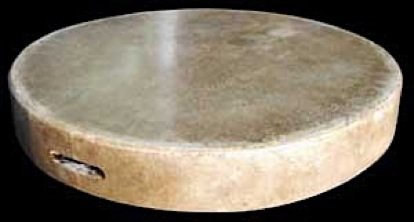
The Ravanne is a Mauritian instrument made from goat skin, it comes under the frame drum category (which also includes tambourines, riq, daf, bodhran).
The name comes from either the word iravanum in Tamil or possibly rebana in Malay(my personal theory on the origin/etymology) which is also a frame drum.
It is quite a large drum and is hit by using the fingers around the edges.
Its origins come from the time of slavery in Mauritius. The drums it resembles the most would have to be the bendir(North Africa, Middle East), thappu (South India) and the large bodhran (from Ireland).
Here is an example of the ravanne being played:
For a comparison with one of have a look at this bendir solo:
Monday, November 1, 2010
Saving Threatened Languages
I found a nice video about saving dying languages in Mexico, it was really nice because it gave examples of
people using the language in a contemporary context (a rock band), people from other cultures learning the language.
Here's the video:
people using the language in a contemporary context (a rock band), people from other cultures learning the language.
Here's the video:
Thursday, September 23, 2010
Merengue
Merengue is a style of music which comes from the Dominican Republic.
There is a strong and (depending on the song)fast beat which makes dancing it different to its counterpart Bachata (the two styles tend to express different feelings, i.e. Merengue has the more party feel while Bachata is very romantic)
This strong beat is expressed in the steps (and hip movements) which you can see here:
I love the fast beat, when music is running at 120 bpm (beats per minute) and over you can really get drawn into the music.
I've got several favourite songs,
firstly let's listen to Elvis Crespo. His song Suavemente was a big hit and helped garner popularity for Merengue:
Check out Oro Solido as well. Here's their song Abusadora:
There is a strong and (depending on the song)fast beat which makes dancing it different to its counterpart Bachata (the two styles tend to express different feelings, i.e. Merengue has the more party feel while Bachata is very romantic)
This strong beat is expressed in the steps (and hip movements) which you can see here:
I love the fast beat, when music is running at 120 bpm (beats per minute) and over you can really get drawn into the music.
I've got several favourite songs,
firstly let's listen to Elvis Crespo. His song Suavemente was a big hit and helped garner popularity for Merengue:
Check out Oro Solido as well. Here's their song Abusadora:
Thursday, September 2, 2010
Afrikaans and Afrikaanses
Afrikaans is a language in South Africa which developed from Dutch with other influences (Khoekhoe - the language known for its click sounds, Malay and English vocabulary).
Afrikaans is spoken mainly by two groups of people in South Africa: Coloureds and Afrikaners.
One of the most interesting things about the language is the lack of verb conjugation in the present tense:
(Taken from http://en.wikipedia.org/wiki/Afrikaans)
This identity, especially in present post-apartheid South Africa, has made a place in a variety of contexts:
It is found in a major language association :
ATKV (Afrikaanse Taal- en Kultuurvereniging (Afrikaans Language and Cultural Association)
Afrikaans op Televisie provides a list of media (movies, docos) regarding Afrikaanses
Afrikaans is spoken mainly by two groups of people in South Africa: Coloureds and Afrikaners.
One of the most interesting things about the language is the lack of verb conjugation in the present tense:
| Afrikaans | Dutch | English | German |
|---|---|---|---|
| ek is | ik ben | I am | ich bin |
| jy/u is | jij/U bent | you are (sing.) | du bist (informal sing.) |
| hy/sy/dit is | hij/zij/het is | he/she/it is | er/sie/es ist |
| ons is | wij zijn | we are | wir sind |
| julle is | jullie zijn | you are (plur.) | ihr seid (informal pl.) |
| hulle is | zij zijn | they are | Sie (formal sing. & pl.)/sie sind |
In regards to the speech community itself:
Afrikaans speakers have normally been considered Afrikaners (internationally) but this term tends to focus on the white Afrikaner community and excludes the Coloureds and any other speakers.
Afrikaanses is a new name for the community (or "Afrikaanssprekendes") which encompasses all groups.This identity, especially in present post-apartheid South Africa, has made a place in a variety of contexts:
It is found in a major language association :
ATKV (Afrikaanse Taal- en Kultuurvereniging (Afrikaans Language and Cultural Association)
- This organisation is originally an Afrikaner organisation but now incorporates all speakers and works in various avenues (running a festival, Drama competitions).
Afrikaans op Televisie provides a list of media (movies, docos) regarding Afrikaanses
- http://www.afrikaansop.tv/speak-out/
- One of the series is called Binnelanders involving a “multiracial Afrikaans speaking community” revolving around the lives of doctors and nurses.
- http://beta.mnet.co.za/mnetvideo/BrowseVideo.aspx?channelId=3&CategoryId=104
- Check out the band Gazelle in the MK Awards of 2010! They've incorporated Khoekhoe and a funky beat:
Subscribe to:
Posts (Atom)